"He who has never learned to obey cannot be a good commander." — Aristotle
"To lead people, walk behind them." — Lao Tzu
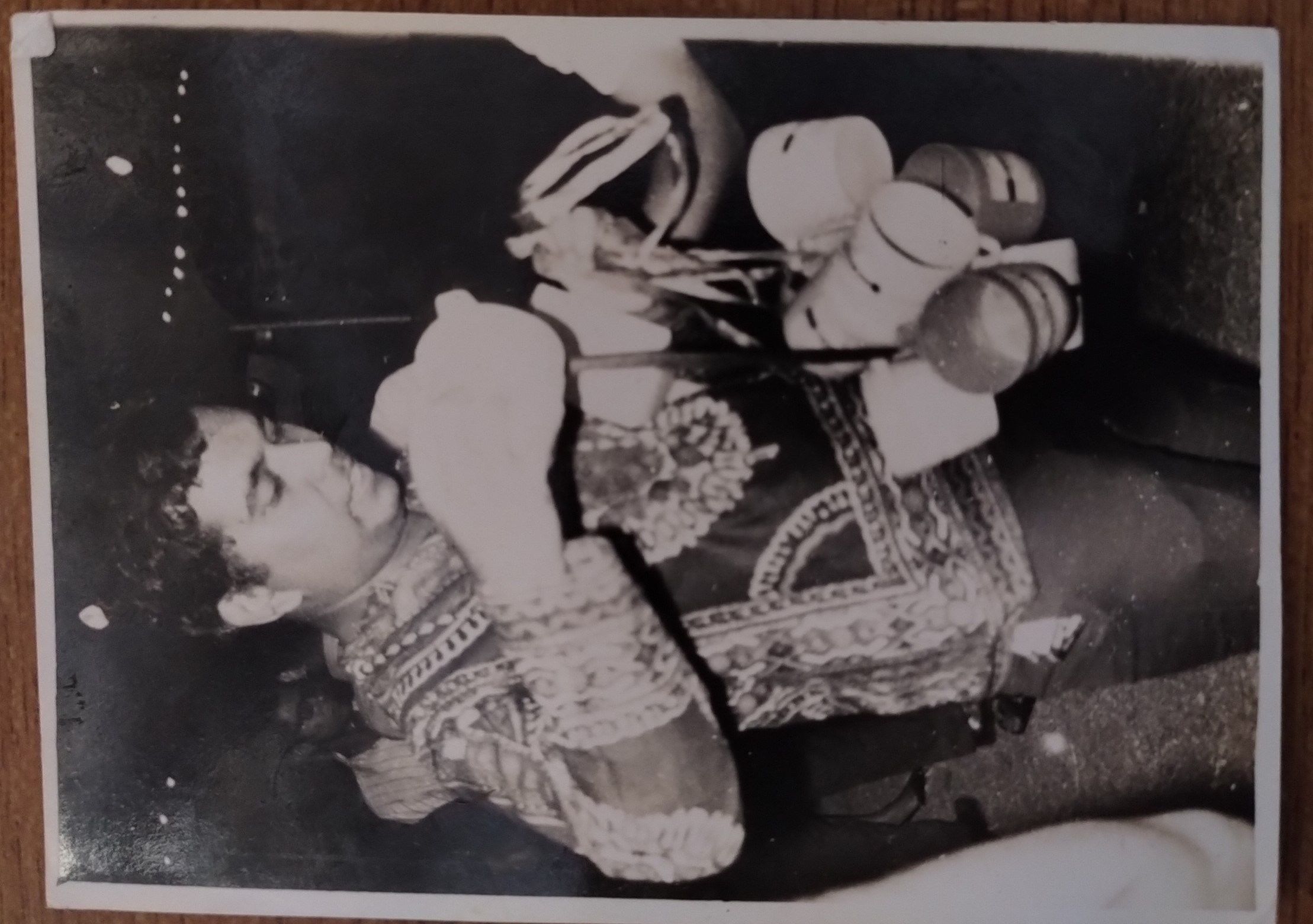
A theft of hundred thousand rupees in the Mahim branch in 1974 was a significant event in the branch's history (the details of which is covered in a subsequent chapter), the aftermath revealed the true mettle of the people I worked with. In the center of that storm was our Branch Secretary, Xavier D’Cruz.
In the world of banking, there are leaders appointed by the management, and then there are leaders anointed by the people. D’Cruz was the latter. A man of impeccable character and rational thinking, he commanded equal respect from the staff he led and the management he often challenged.
A Voice for the Distressed
When our cashier, Mr. Parekh, was detained at the police station—his mind tortured by thoughts of his wife in the operating theater—it was D’Cruz who led the entire staff to the station. They didn't go to protest; they went to offer themselves as collateral. This mass gesture of solidarity moved the police so much that they released Parekh, allowing him to be with his family during their most vulnerable hour.
However, the bank’s management, bound by protocol and the gravity of the loss, eventually suspended Parekh. It was a devastating blow. Parekh was now a father of three, living in a rented house with a recovering wife and no salary. He was a man pushed to the brink.
The Ultimate Sacrifice of Status
D’Cruz belonged to a minority "splinter" union. He knew that to fight a case this large against the bank’s top management, Parekh needed the weight of the majority union behind him. I remember the meeting held within the branch premises. D'Cruz's voice carried through the halls:
"There is no point in being a member of any union if we cannot save a member in distress. Affiliation without results is wasteful. It is time we prioritize our colleague over our politics."
In an act of profound humility, he urged his entire following to join the majority union en masse to ensure Parekh had the best possible defense. D'Cruz essentially dissolved his own power base to save one man. His strategy worked—the enquiry eventually exonerated Parekh, and he was reinstated in service.
The Master of the Microphone
Beyond these grand gestures, D’Cruz had a persistent way of pushing his colleagues to overcome their self-imposed limitations. I was a direct beneficiary of this "push." In those days, I was painfully nervous about public speaking. Every opportunity that involved "talking"—whether an introductory note, a vote of thanks, or a felicitation for a departing colleague—saw me retreating into the background.
D’Cruz, a natural authority at the podium, knew how to persuade. On several occasions, I would go to him before a meeting and almost plead: "Do not ask me to give a speech today." He would nod in apparent agreement, but to my dismay, once the meeting began, he would announce: "And now, Mr. Natarajan will say a few words!" If I remained frozen in my seat, he would simply pause the proceedings. "Until you speak," he would tell the room, "the meeting will not proceed."
Murmuring frustrations to myself, I would reluctantly take the microphone. Because Mahim was a large branch with frequent staff movements, these "incidences" happened often. Gradually, fearing his persistence more than the crowd, I began to accept the microphone without a murmur.
What felt like a series of frustrating events at the time turned out to be an immense help in my later assignments. This helped in my later roles—whether conducting two-hour sessions at the training college, leading manager review meetings, or representing the bank at seminars convened by the Reserve Bank of India. He didn't just teach me to speak; he taught me that a banker must be prepared to step up whenever the occasion requires.
The Final Departure
D’Cruz’s leadership was deeply personal; he knew the birthdays of our children and the anxieties of our homes. Once, I was struggling with train reservations for my annual leave to my native place, he immediately volunteered to help, collecting the details of my family to use his personal contacts.
The next day, D’Cruz was missing. A neighbor brought news that he had been admitted to the hospital with an advanced case of Tetanus. When we rushed to his bedside, this energetic man was perfectly still. Yet, seeing me, he smiled and, with great effort, pulled a bundle of papers from his pocket.
"Uncle," he whispered, "I wish I could have done more. By the time I recover—if I do—it may be too late for your travel."
He handed me my reserved tickets. Even while battling a fatal infection, his last coherent thoughts were of a promise made to his manager. Xavier D’Cruz breathed his last that same day. I have never attended a funeral like his—a sea of colleagues and clients attended. Even in death, D’Cruz was leading the way.
D’Cruz’s life was all about selflessness. Authority is not granted by a title, but earned through unwavering loyalty to one’s colleagues. He showed that a leader’s greatest duty is to be a shield for those in distress, even at the cost of their own power.